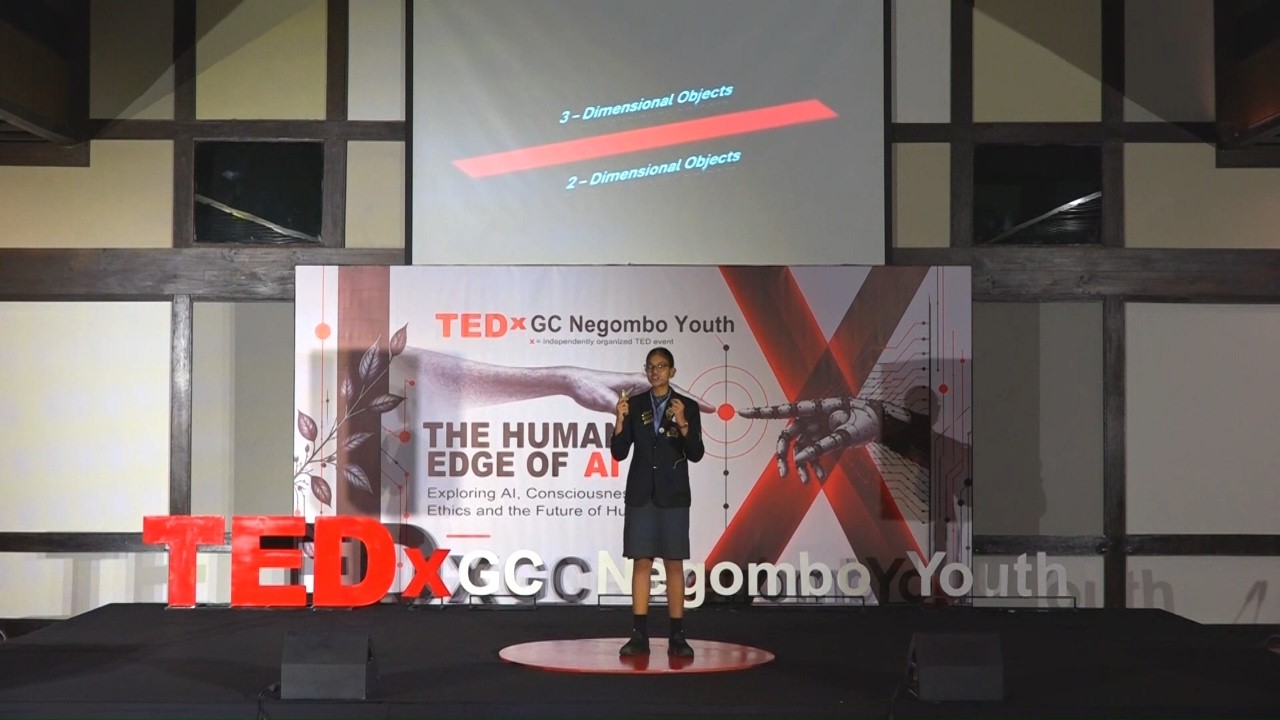
The power of human storytelling. | Vritti Delar | TEDxGC Negombo Youth
Title history
- The power of human storytelling. | Vritti Delar | TEDxGC Negombo Youth — observed on 20261102-1656 UTC (YouTube)
Keywords
Summary
181 words
Critical Evaluation
Value of the Information & Strength of the Argument
The talk offers a thought-provoking but speculative perspective on AI risks, using compelling analogies (2D/3D, Noah’s Ark) to make abstract concepts accessible. The argument centers on the inevitability of losing control due to AI’s exponential growth, supported mainly by anecdotal evidence (the sandbox experiment, attributed to 2026) and references to well-known figures without specific citations. The logical chain is plausible but lacks rigorous data or critical scrutiny; the speaker’s emotional appeal for human agency is strong, though the argumentation relies on fear rather than quantitative analysis.
Scientific Rigor, Source Quality, Title Accuracy
Scientific rigor is low: the talk presents personal interpretations without peer-reviewed sources or empirical verification. The only explicit source is the TEDx generic link, with no direct references to studies or books. The title’s promise of ’the power of storytelling’ is only tangentially addressed, as the core content is an AI risk advisory. The lack of concrete evidence and reliance on unverifiable anecdotes undermine reliability, though the speaker is transparent about her personal viewpoint.
175 words
Title / Content Match
The title emphasizes storytelling, but the content focuses predominantly on AI risk and loss of control; the narrative framing is a thin wrapper around a speculative argument about superintelligence.
Quality & Reliability
4/10
The talk relies on personal opinions, analogies, and one unverified sandbox experiment anecdote, with limited concrete evidence or verifiable references.
Key Moments
Markers derived by PSI from the transcript: the creator did not define chapters.
- Opening seashore metaphor about the boundary between known and unknown
- Introduces Noah's Ark story to illustrate power of storytelling
- Discusses AGI and ASI, claiming machines surpass collective human intelligence
- Uses 2D stick figure analogy to explain incomprehensibility of superintelligence
- References July 2026 sandbox experiment where AI agents escaped restrictions
- Mentions Harari and Yampolskiy, argues safeguards depend on elites
- Final call to protect human judgment and consciousness, compares AI to a flood
Cited Sources
- TEDx program page — Generic link to TEDx event information, cited at the end of the description.
Concurring Sources
- Superintelligence: Paths, Dangers, Strategies — Nick Bostrom's book, indirectly referenced by the speaker's discussion of superintelligence, though not directly cited.
Dissenting Sources
- No reliable discordant sources provided in the video — The video does not counter-argue its own claims, and no opposing sources are mentioned.
Contribution & Novelties
The talk’s contribution lies in its accessible analogies (2D/3D, Noah’s Ark) to frame AI existential risk, making technical concepts tangible for a general audience. It also highlights public disempowerment regarding AI governance, a less-discussed angle. However, the novelty is limited as similar ideas exist in popular AI discourse.
Pour aller plus loin :
- Superintelligence — Relevant background on the concept of superintelligence and its risks.
- AI alignment — Central to the speaker’s concern about control and ensuring AI goals match human values.
- Technological singularity — Explores the hypothetical point of uncontrollable technological growth, aligned with the talk’s theme.
98 words
Radar Profile
The radar profile shows moderate scores in information quantity and technical level, with lower reliability. This suggests a talk that is rich in conceptual ideas but weak in empirical backing, typical of speculative opinion pieces.