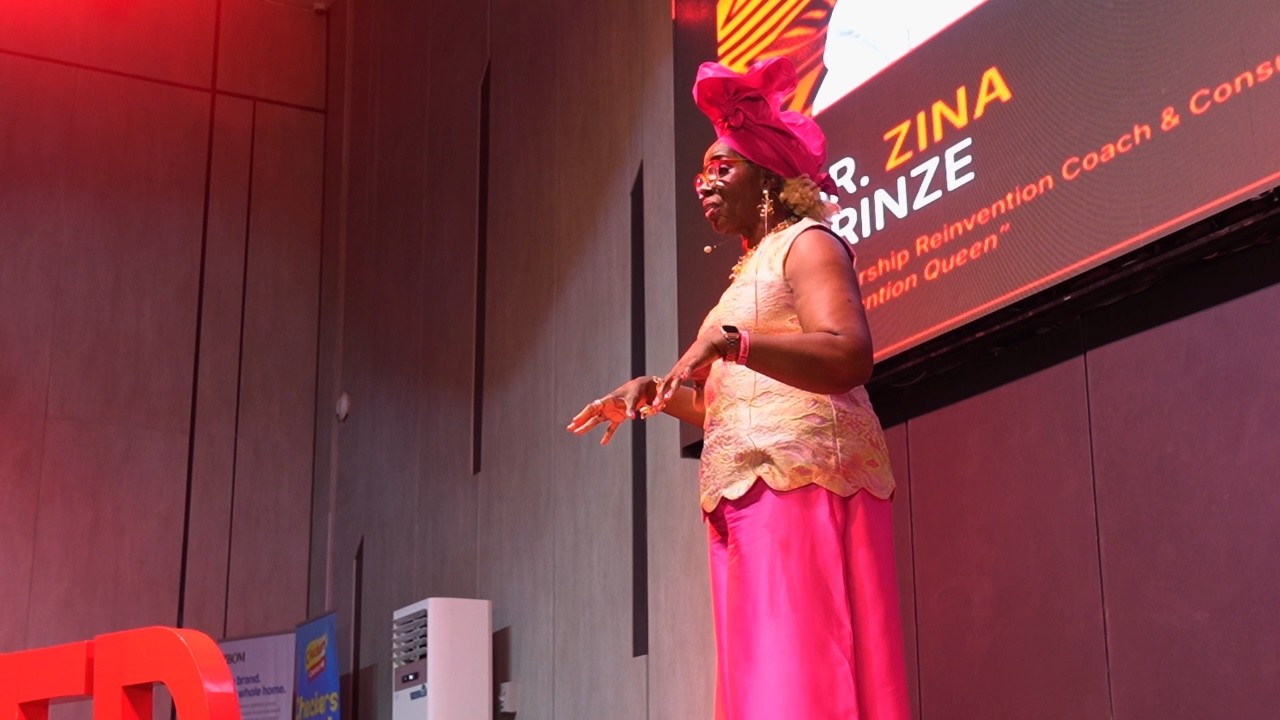
Who Is the African Woman Really - Na Who She Be? | Dr. Zina Arinze | TEDxKubwa
Keywords
Summary
155 words
Critical Evaluation
Value of the Information & Strength of the Argument
The talk’s value lies in its authentic personal narrative, which humanizes complex issues of identity, culture, and self-perception. Arinze effectively argues that societal expectations create masks that can obscure one’s true self. Her use of concrete examples, from being labeled ‘OG B’ to the struggle with mathematics, grounds her argument in lived experience. She draws a compelling connection between cultural pressure and late-life ADHD diagnosis, highlighting how masking can delay recognition of neurodivergence. The argumentation is persuasive primarily through emotional appeal and anecdote, rather than systematic evidence. While she mentions a UK study on black women and ADHD, she does not cite it properly, weakening the empirical support. Nonetheless, the three reflective questions at the end provide practical value for individual introspection.
Scientific Rigor, Source Quality, Title Accuracy
Rigueur scientifique: The talk is not rigorously scientific; it is a personal expert opinion without peer-reviewed citations. The only source provided in the description is the general TEDx page. Arinze references a UK study but provides no specific details, limiting verifiability. Quality of sources: minimal, relying on personal testimony and general cultural references. Adéquation titre/contenu: The title aligns well with the content, which explicitly questions the identity of the African woman and presents a nuanced answer. The speaker’s authority comes from her career and personal journey, but not from academic research. Overall, the talk is compelling and relevant, but unsuitable as a sole source for scholarly claims.
244 words
Title / Content Match
The title directly addresses the content; the talk explores the complexity of African womanhood and identity.
Quality & Reliability
5/10
Personal testimony and expert opinion, but lacking rigorous citations. The ADHD study is mentioned without details. Content is insightful but subjective.
Key Moments
Markers derived by PSI from the transcript: the creator did not define chapters.
- Introduction and central question: 'Who is the African woman really?'
- Childhood in Kent, unaware of being African; living with grandmother.
- Return to Nigeria, boarding school bullying and attempts to fit in.
- Struggle with mathematics and adapting to Nigerian education system.
- Law career and reinvention into technology during the 1993 elections.
- Personal breakdown after divorce; feeling like a failure as an African woman.
- Late-life ADHD diagnosis and its role in understanding masking.
- Three questions for the audience: examine audience, masks, and what to put down.
- Conclusion: reclaiming the authentic self beyond societal expectations.
Cited Sources
- TEDx Program — Reference to the TEDx event organization; talk is part of independently organized TEDx events.
Contribution & Novelties
The talk offers a fresh perspective by intertwining personal narrative with broader societal critique, emphasizing the plurality of African womanhood and the psychological cost of conformity. Its novelty lies in connecting cultural expectations to late-life ADHD diagnosis, highlighting how masking can obscure neurodivergent traits in women. The three reflective questions provide a practical framework for self-examination, which is an original contribution to the discourse on identity.
Pour aller plus loin :
- The Danger of a Single Story - Chimamanda Ngozi Adichie — This TED talk directly complements the video’s critique of monolithic narratives.
- Impostor syndrome — Relevant to the speaker’s feelings of not belonging and performing.
- Self-concept — Explores how identity is formed and influenced by society.
- Masking (personality) — Discusses the concept of hiding one’s true self in social contexts, central to the talk.
135 words
Radar Profile
The radar profile shows moderate quantities of information and quality, but low technical level and reliability. This is consistent with a motivational/experiential talk rather than a technical or empirical presentation. The emphasis is on personal insight and cultural commentary, not on rigorous data.