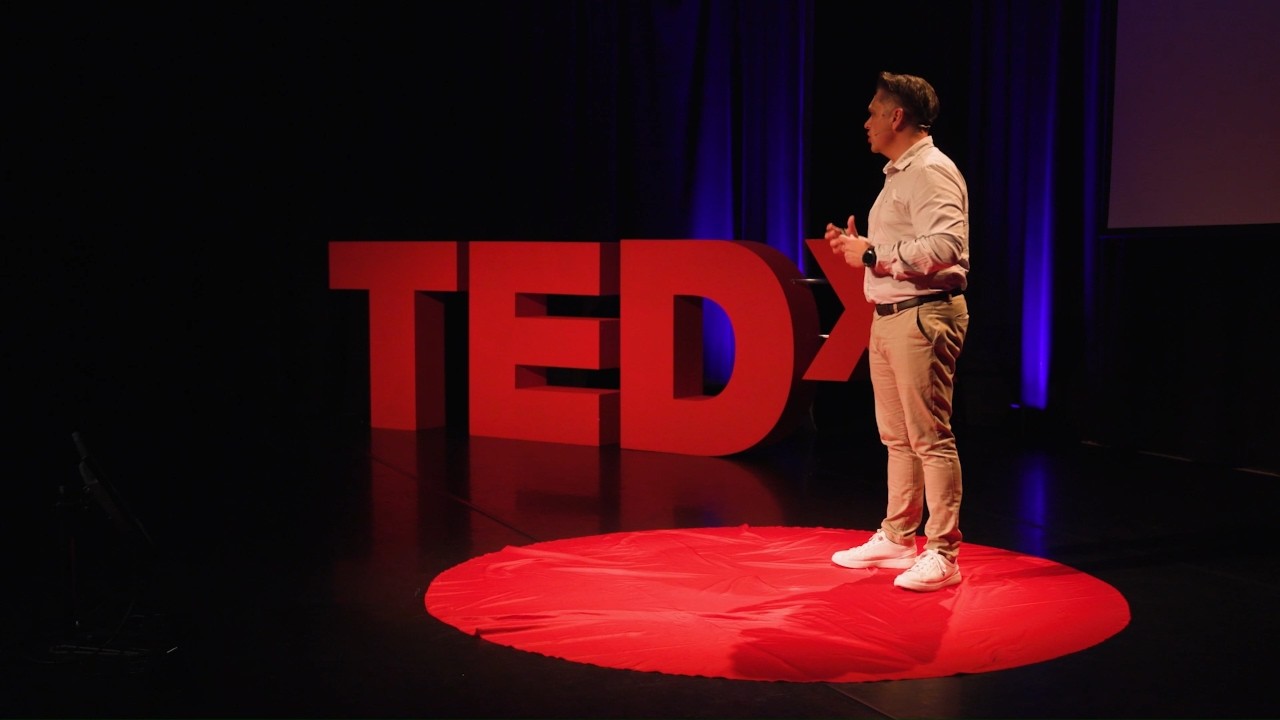
The Mirror, The Marriage and the Magic! | Vern Dercksen | TEDxCrawley
Title history
- The Mirror, The Marriage and the Magic! | Vern Dercksen | TEDxCrawley — observed on 20261027-0221 UTC (YouTube)
Keywords
Summary
128 words
Critical Evaluation
Value of the Information & Strength of the Argument
The value of this talk lies in its authentic personal narrative and its clear, memorable framework (mirror, marriage, magic). The argument is built on emotional appeal and the authority of personal experience, which makes it compelling for a general audience. However, the claims are not supported by scientific evidence or systematic data. The reasoning is largely anecdotal and relies on rhetorical devices like metaphors and repetition. While the core message—identity precedes action—aligns with established psychology and behavioral change literature, the speaker does not provide citations or references to substantiate his assertions. The strength of the argument is in its emotional resonance and practical simplicity, but it falls short of rigorous scientific argumentation.
Scientific Rigor, Source Quality, Title Accuracy
The scientific rigor is low: the talk is a personal testimony and coaching perspective, not a research-based presentation. The only external reference is a passing mention of James Clear, whose work is not formally cited with specific sources. The description provides no links to studies or supporting materials beyond the generic TEDx page. The title (The Mirror, The Marriage and the Magic!) is catchy and accurately mirrors the three-part structure of the talk, though it might undersell the deeper identity theme. No comments were available for analysis, so public reception cannot be assessed. Overall, the content is more motivational than scientific, and the absence of verifiable sources limits its reliability as an evidence-based resource.
241 words
Title / Content Match
The title accurately captures the three central metaphors (mirror, marriage, magic) used to illustrate the speaker's journey, though it may initially obscure the deeper identity-focused message.
Quality & Reliability
4/10
The talk is a personal narrative about transformation, relying on anecdotal evidence and motivational rhetoric rather than empirical data or external references. While genuine and relatable, it lacks scientific rigor and verifiable sources.
Key Moments
Markers derived by PSI from the transcript: the creator did not define chapters.
- Introduction: Why people fail to change—identity over information.
- The mirror moment: Struggling to tie shoelaces and facing the truth.
- The marriage crisis: The 12-word message that changed everything.
- The magic of letting go: Opening hands to give and receive.
- The coaching example: Challenging a client to step back and see what's in front.
- The three lessons: Self-control, selflessness, self-sacrifice.
- Closing call: Who do I need to become?
Cited Sources
- TEDx Program — Official TEDx page, referenced in the video description.
Contribution & Novelties
The talk offers a fresh framing of personal transformation by structuring it around three relatable life events (mirror, marriage, magic) and distilling into three virtues (self-control, selflessness, self-sacrifice). It reframes change as an identity shift rather than a knowledge gap, which, while not new, is presented with emotional authenticity and practical coaching anecdotes. The original contribution lies in the personal narrative and the memorable encapsulation of key principles.
Pour aller plus loin :
- Identity (social science) — Explores how identity shapes behavior and aligns with the talk’s core thesis.
- Atomic Habits — James Clear’s book on identity-based habits, directly referenced in the talk.
- Growth mindset — Carol Dweck’s work on the belief that abilities can be developed, complementary to the talk’s perspective on change.
124 words
Radar Profile
The radar profile shows a balanced but moderate performance across all dimensions, reflecting a talk that is engaging and well-structured but lacks scientific depth and reliable sources. The highest scores are in quality of information (anecdotal but genuine) and overall global rating, while quantity and reliability remain low due to the absence of external citations.