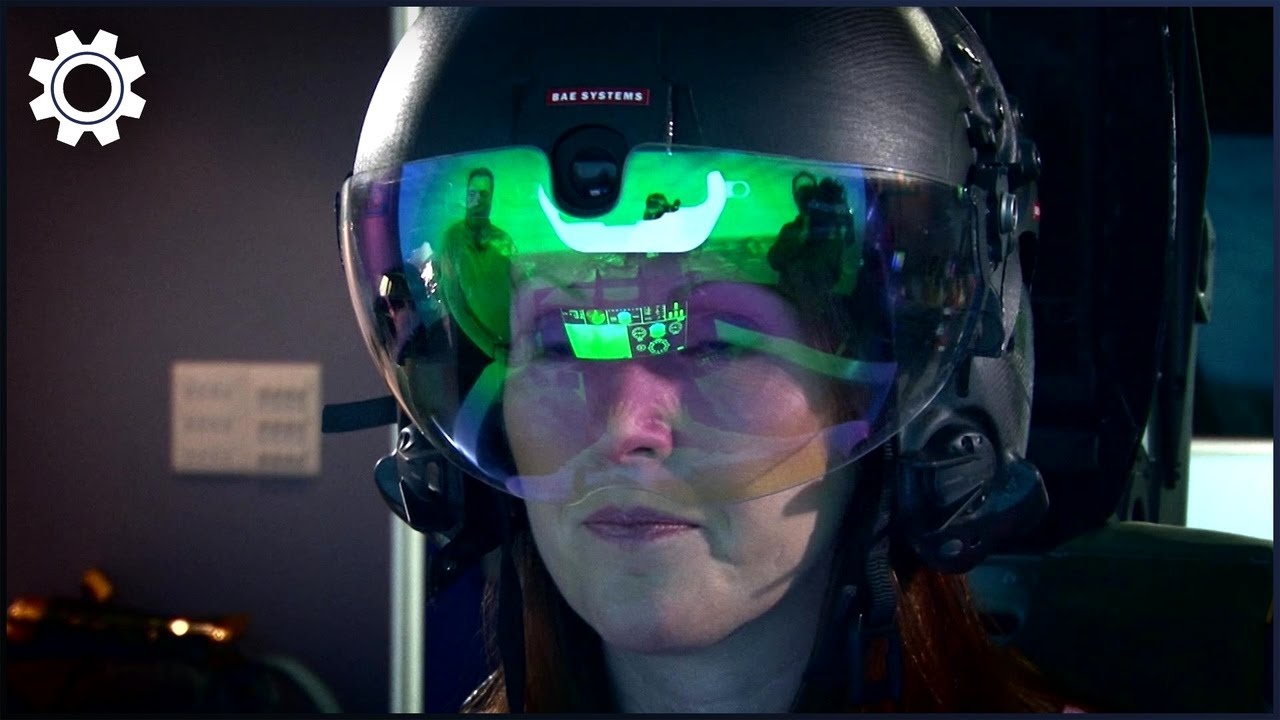
Inside the Future of Military Tech - Fighter Helmets, 3D Printing and More
Keywords
Summary
257 words
Critical Evaluation
Value of the Information & Strength of the Argument
The value of the information lies in its timely, clear presentation of emerging military technologies, with direct access to engineers and test pilots providing an insider perspective. The argumentation is largely based on demonstrations and expert testimony rather than extensive comparative analysis. For instance, the Striker 2 helmet is presented as a three-in-one solution (protection, tracking, and display), and the benefits are explained through a logical progression: better information leads to better decisions, which leads to a combat advantage. Similarly, the active inceptor sticks are justified by explaining how haptic feedback improves situational awareness and reduces cognitive load. The 3D printing segment argues that on-demand manufacturing could transform military logistics, yet it honestly notes that parts must be pre-designed and the technology is still maturing. The prosthetics segment relies on a compelling personal story to illustrate the advantages of microprocessor knees, though it does not provide detailed clinical data. Overall, the arguments are coherent and persuasive for a general audience, but they lack in-depth technical comparisons or independent verification.
Scientific Rigor, Source Quality, Title Accuracy
The documentary showcases institutions such as BAE Systems, DARPA, Aurora Flight Sciences, and the Invictus Games, which are credible in their fields. However, no external sources or citations are provided; information comes exclusively from interviews and on-screen demonstrations. The title is an accurate summary of the content, though slightly broad, as it includes not just helmets and 3D printing but also flight controls, VTOL, and prosthetics. The production adheres to a standard documentary format, and the claims are expressed with reasonable caution (e.g., the VTOL X-Plane is a technology demonstrator). While the rigor is sufficient for a general overview, the lack of footnotes or references limits its value as a scholarly resource. The video’s public reception is not available for analysis.
305 words
Title / Content Match
The title accurately reflects the content, which covers fighter helmets, 3D printing, flight controls, VTOL aircraft, and prosthetics in a military tech context.
Quality & Reliability
7/10
The documentary features interviews with engineers, test pilots, and amputees, and includes demonstrations of technologies. While specific claims are not cited with external sources, the information appears technically plausible and consistent with known industry trends. The production values and expert participation lend credibility.
Key Moments
Markers derived by PSI from the transcript: the creator did not define chapters.
- Introduction to BAE Systems Striker 2 helmet development and testing at Rochester.
- Helmet environmental stress testing: heating to 70°C, cooling to -40°C, and 6G vibration.
- Test pilot Mark Bowman explains helmet capabilities: see-through display, HD video, and head tracking.
- Segment on DARPA's VTOL X-Plane program and Aurora Flight Sciences Lightning Strike design.
- 3D printing demonstration at 3T facility, showing how drone parts are made and cleaned.
- Discussion of 3D printing's potential to disrupt military logistics, with examples of cost savings.
- Return to BAE Systems for active inceptor sticks: force feedback and cooperative pilot control.
- Brief segment on the F-35B stealth fighter approved for UK carriers.
- Coverage of Invictus Games in Florida and advanced prosthetics for athletes.
- Demonstration of Össur X3 microprocessor knee, its sensors, and stumble recovery features.
Cited Sources
- BAE Systems — Manufacturer of Striker 2 helmet and active inceptor sticks; main subject of the first and third segments.
- DARPA — Defense Advanced Research Projects Agency responsible for the VTOL X-Plane program.
- Aurora Flight Sciences — Developer of the Lightning Strike VTOL X-Plane demonstrator.
- Rolls-Royce — Supplies the engine that powers the distributed propulsion system on the Lightning Strike.
- Southampton University — Designed the 3D printed drone used by the Royal Navy in the demo.
- 3T — Additive manufacturing facility in Berkshire where the drone parts were printed.
- Invictus Games — Event where advanced prosthetics were showcased for wounded veterans.
- Össur — Manufacturer of the X3 microprocessor knee demonstrated by an amputee athlete.
Contribution & Novelties
The documentary provides an accessible overview of several emerging military technologies, showing real-world testing and user experiences. It highlights the convergence of digital displays, sensor fusion, force feedback, additive manufacturing, and bioengineering. While individual technologies are not new, the compilation of these advancements in a single episode offers a useful snapshot. The behind-the-scenes access to BAE Systems’ facilities and the Invictus Games adds a human element to the technological progress.
Pour aller plus loin :
- Helmet-mounted display — Explains the technology behind the Striker 2’s visor projection and head tracking.
- Distributed propulsion — Core concept of the VTOL X-Plane’s electric ducted fans.
- 3D printing — General overview of additive manufacturing and its applications, including military logistics.
- Force feedback — Relevant to active inceptor sticks and haptic cues for pilots.
- Prosthesis — Covers the evolution of prosthetic limbs, including microprocessor-controlled knees.
140 words
Radar Profile
The radar profile shows moderate to high scores on information quantity and quality, with a slightly lower technical level aimed at a general audience. Reliability is good but not perfect due to lack of external citations. This suggests a solid, engaging documentary that is informative but not deeply analytical.