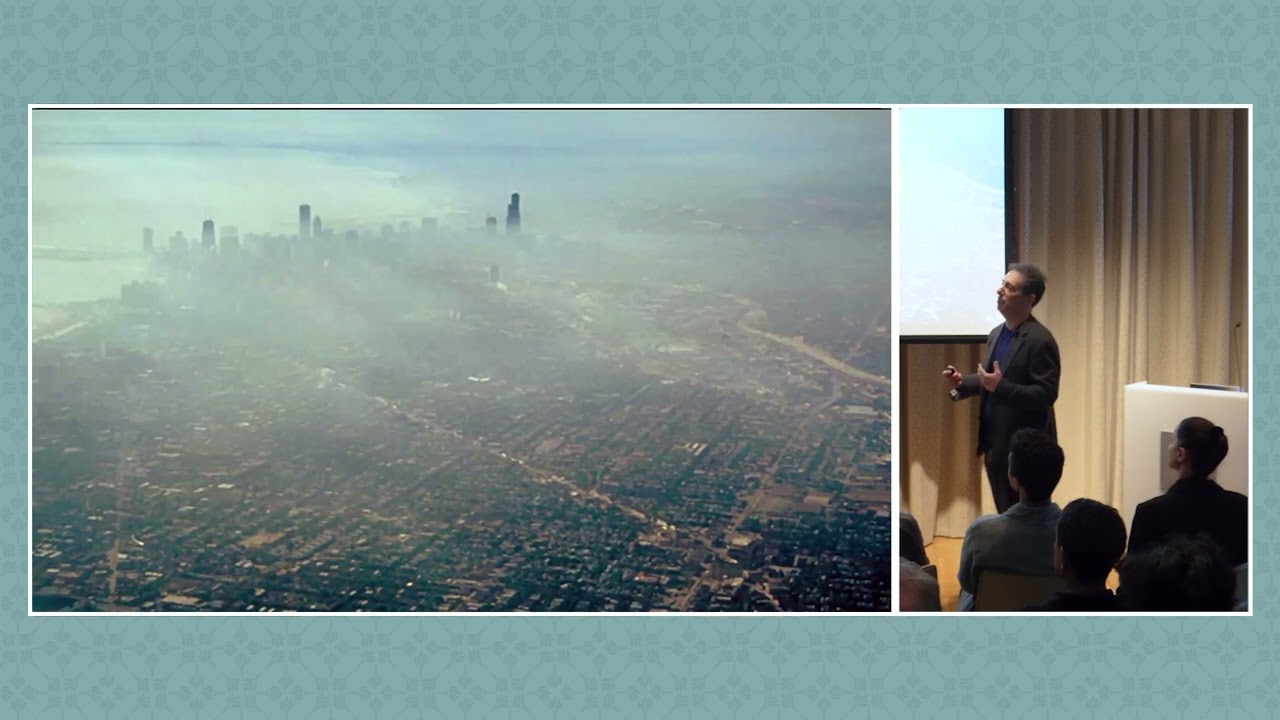
Climate Change and the Future of Cities
Title history
- Climate Change and the Future of Cities — observed on 20261105-2136 UTC (YouTube)
Keywords
Summary
163 words
Critical Evaluation
Value of the Information & Strength of the Argument
The value of the information is high, as it brings a sociological perspective to climate adaptation, highlighting the often-overlooked role of social infrastructure. Klinenberg’s argument is well-structured: he uses historical and recent examples to demonstrate how vulnerability to climate events is shaped by both physical and social systems. He supports his claims with maps showing mortality patterns in Chicago, data on precipitation surpassing infrastructure capacity in New York, and narratives of individual experiences. The reasoning is clear and persuasive, connecting abstract climate risks to concrete urban realities. He also introduces actionable ideas, such as investing in public spaces and community-based resilience, which strengthens his argument for a holistic approach to urban planning.
Scientific Rigor, Source Quality, Title Accuracy
The talk demonstrates strong scientific rigor in its reliance on empirical research, particularly the author’s own studies and IPCC data. However, as a lecture, it lacks explicit citation of sources within the talk; the only research referenced are his books and a New York Times article, but without precise references or URLs. The description provides only general links to the institute and mailing list, not to the scholarly works mentioned. The title perfectly matches the content, as it systematically addresses challenges and potential solutions for cities in a warming world. The argumentation is coherent and evidence-based, though it would benefit from clearer citation practices for a formal research context.
236 words
Title / Content Match
The title accurately reflects the content: the talk focuses on urban responses to climate change, particularly the role of social infrastructure in building resilience.
Quality & Reliability
7/10
The talk is delivered by a respected academic and draws on his own published research (e.g., Heatwave, Palaces for the People) and IPCC data. However, it is a public lecture without formal citations, relying heavily on anecdotal case studies and personal expertise, which limits verifiability and reduces the score to 7.
Key Moments
Markers derived by PSI from the transcript: the creator did not define chapters.
- Introduction of speaker and context of the talk.
- Discussion of two main climate action categories: mitigation and adaptation.
- Analysis of the 1995 Chicago heatwave and the concept of social infrastructure.
- Hurricane Ida and the failure of New York's sewage system under extreme precipitation.
- Examples of social infrastructure projects and conclusion.
Cited Sources
- NYUAD Institute Research — General information about the institute hosting the talk.
- 19 Washington Square North — Venue and description of the NYUAD New York location.
- NYUAD Institute Event Mailing List — Sign-up for future events related to this talk.
Contribution & Novelties
The talk offers a unique sociological perspective on climate adaptation, emphasizing social infrastructure as a key resilience factor. It integrates empirical research from Chicago and New York with global examples, providing a framework for urban planning that prioritizes community connections. The novelty lies in shifting focus from purely technical solutions to the social fabric of cities, arguing that public spaces and social ties are as critical as engineered systems.
Pour aller plus loin :
- Social infrastructure — A foundational concept for the talk’s core argument.
- Urban heat island — Relevant to the Chicago heatwave and urban temperature management.
- Climate change adaptation — Contextualizes the adaptation strategies discussed.
107 words
Radar Profile
The radar profile shows high scores in quantity and quality of information, moderate technical level, and moderate overall reliability. This indicates a well-informed but non-technical presentation, suitable for a general audience, with a strong basis in expert knowledge but limited formal citation.